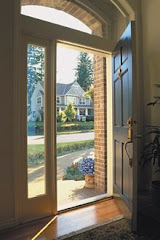
Trying to decide whether to do some home remodeling this year or leave your money in the bank? You can do both if you remodel with paint. “The cost of do-it-yourself interior painting is so low, it’s almost like remodeling without touching your bank account,” says Debbie Zimmer, spokesperson for the Paint Quality Institute.
The key, of course, is investing some sweat equity.
“While a professional painter might charge up to $500 or more to paint a room, if you’re willing to provide the labor, you can complete the job for a small fraction of that amount,” says Zimmer.
Looked at another way, do-it-yourself interior painting is a great way to “earn” money. Since painting a room is usually a two-day proposition, if a contractor-applied paint job costs $500 in your area, you’re essentially paying yourself $250 a day to paint.
Absent the labor cost, do-it-yourself interior painting is downright thrifty. Your only outlay is for paint, application equipment like brushes and rollers, and some miscellaneous expenses for things like tape and a drop-cloth. Total cost? “Less than $100 a room,” says Zimmer. That’s little more than pocket-change in today’s remodeling world.
Whether you’ve decided to do your own interior painting to save money or simply to have a hand in beautifying your home, Zimmer offers the following tips:
“Take the time to properly prepare the walls and other surfaces before starting to paint,” she says. “That means cleaning them with a solution of detergent and water, after which they should be rinsed and allowed to dry. If there are any cracks or holes in the walls, this is the time to repair them with spackling compound or a good-quality acrylic caulk.”
Zimmer also recommends using only high quality brushes and rollers. “These will help you apply the paint more evenly to get professional-looking results, even if this is your first time painting,” she says.
When applying latex paints, be sure to use brushes and rollers with synthetic bristles and covers. According to Zimmer, the brushes will maintain the proper stiffness and the rollers will maintain their shape even when exposed to a lot of water.
Lastly, Zimmer recommends that do-it-yourselfers buy only top quality 100% acrylic latex interior paints, which she describes as “the do-it-yourselfer’s best friend.”
“If you’re going to spend time and effort doing your own interior painting, you want the job to last, and that’s where these paints really pay off,” she says. “Top quality 100% acrylic latex paints are extremely durable, plus they resist fading, so your paint job will look great for years to come.”
So if you think you’re up to the job, put yourself to work doing your own interior painting. You’ll be rewarded not just with the money you save, but also with the satisfaction of a job well done.
For more information, visit www.paintquality.com.
Thursday, January 6, 2011


Wednesday, January 5, 2011
Helping Buyers become Homeowners – Lowe’s Offers Customers a One-Stop Destination for Repairs, Renovation Products and Service Needs
There are times in life when we all need a little bit of help. Whether you’re a first-time home buyer or someone looking for a fresh start, today’s market can be challenging; however, it is also ripe with opportunity and possibilities. That’s where Lowe’s comes in to lend a helping hand.
Already a leader in the home improvement space, the retailer made a bold decision recently to take its real estate efforts a step further, unveiling a new, nationwide, in-store program, in connection with REbuildUSA, geared toward offering customers a one-stop destination for repairs, renovation products and service needs through the FHA Streamlined 203(k) program, which adds money into a mortgage for repairs and renovations.
“Homes needing renovation are typically the very best buys available; however, most prospective buyers have no idea how to finance both the purchase of the home and the renovation work required,” says Dennis Walsh, CEO of REbuildUSA. “The FHA Streamlined 203(k) offers a competitive solution. At the same time, millions of current homeowners could also benefit from this program that offers excellent rates and the ability to make improvements to their homes.”
Always looking to make the process easier for consumers, REbuildUSA and Lowe’s recently added lending partner Bank of America. The Charlotte-based company joins Wells Fargo as an approved lender in this program.
“Lowe’s is working with REbuildUSA to be the home improvement solution for products and services required by a Streamlined 203(k) loan,” says Mark Malone, vice president of consumer marketing for Lowe’s. “We can help facilitate the needs of home buyers acquiring distressed properties and facilitate the process of getting their projects done.”
Another plus for faster facilitation: Lowe’s is an approved contractor, which significantly cuts down the contractor validation process, from three weeks for independent contractors to about three days.
Specially trained Lowe’s associates in stores across the country, except in Texas, can help the customer plan the project and select products, and Lowe’s independent subcontracted installers can handle the installation. The program allows Streamlined 203(k)-qualified customers to have a huge selection of products and services under one roof, and it gives customers the ability to immediately improve their homes by adding equity with the repairs and renovations.
In good markets and bad, Lowe’s has shown that it’s a staunch supporter of the real estate industry and is in it for the long haul, and it’s now going a step further in helping buyers bring their renovation dreams to reality.
For more information on the Lowe’s/REbuildUSA program, please visit www.rebuildusa.com.
Already a leader in the home improvement space, the retailer made a bold decision recently to take its real estate efforts a step further, unveiling a new, nationwide, in-store program, in connection with REbuildUSA, geared toward offering customers a one-stop destination for repairs, renovation products and service needs through the FHA Streamlined 203(k) program, which adds money into a mortgage for repairs and renovations.
“Homes needing renovation are typically the very best buys available; however, most prospective buyers have no idea how to finance both the purchase of the home and the renovation work required,” says Dennis Walsh, CEO of REbuildUSA. “The FHA Streamlined 203(k) offers a competitive solution. At the same time, millions of current homeowners could also benefit from this program that offers excellent rates and the ability to make improvements to their homes.”
Always looking to make the process easier for consumers, REbuildUSA and Lowe’s recently added lending partner Bank of America. The Charlotte-based company joins Wells Fargo as an approved lender in this program.
“Lowe’s is working with REbuildUSA to be the home improvement solution for products and services required by a Streamlined 203(k) loan,” says Mark Malone, vice president of consumer marketing for Lowe’s. “We can help facilitate the needs of home buyers acquiring distressed properties and facilitate the process of getting their projects done.”
Another plus for faster facilitation: Lowe’s is an approved contractor, which significantly cuts down the contractor validation process, from three weeks for independent contractors to about three days.
Specially trained Lowe’s associates in stores across the country, except in Texas, can help the customer plan the project and select products, and Lowe’s independent subcontracted installers can handle the installation. The program allows Streamlined 203(k)-qualified customers to have a huge selection of products and services under one roof, and it gives customers the ability to immediately improve their homes by adding equity with the repairs and renovations.
In good markets and bad, Lowe’s has shown that it’s a staunch supporter of the real estate industry and is in it for the long haul, and it’s now going a step further in helping buyers bring their renovation dreams to reality.
For more information on the Lowe’s/REbuildUSA program, please visit www.rebuildusa.com.
Monday, January 3, 2011
Pending Home Sales Continue Recovery
Pending home sales rose again in November 2010, with the broad trend over the past five months indicating a gradual recovery into 2011, according to the National Association of REALTORS®. The Pending Home Sales Index, a forward-looking indicator, rose 3.5% to 92.2 based on contracts signed in November from a downwardly revised 89.1 in October. The index is 5.0% below a reading of 97.0 in November 2009. The data reflects contracts and not closings, which normally occur with a lag time of one or two months.
Lawrence Yun, NAR chief economist, said historically high housing affordability is boosting sales activity. “In addition to exceptional affordability conditions, steady improvements in the economy are helping bring buyers into the market,” he said. “But further gains are needed to reach normal levels of sales activity.”
The PHSI in the Northeast increased 1.8% to 72.6 in November but is 6.2% below November 2009. In the Midwest, the index declined 4.2% in November to 78.3 and is 7.7% below a year ago. Pending home sales in the South slipped 1.8% to an index of 91.4 and are 7.2% below November 2009. In the West, the index jumped 18.2% to 123.3 and is 0.4% above a year ago.
“If we add 2 million jobs as expected in 2011, and mortgage rates rise only moderately, we should see existing-home sales rise to a higher, sustainable volume,” Yun said. “Credit remains tight, but if lenders return to more normal, safe underwriting standards for creditworthy buyers, there would be a bigger boost to the housing market and spillover benefits for the broader economy.”
The 30-year fixed-rate mortgage is forecast to rise gradually to 5.3% around the end of 2011; at the same time, unemployment should drop to 9.2%.
For perspective, Yun said that the U.S. has added 27 million people over the past 10 years. “However, the number of jobs is roughly the same as it was in 2000 when existing-home sales totaled 5.2 million, which appears to be a sustainable figure given the current level of employment,” he explained.
“All the indicator trends are pointing to a gradual housing recovery,” Yun said. “Home price prospects will vary depending largely upon local job market conditions. The national median home price, however, is expected to remain stable even with a continuing flow of distressed properties coming onto the market, as long as there is a steady demand of financially healthy home buyers.”
Existing-home sales are projected to rise about 8% to 5.2 million in 2011 from 4.8 million in 2010, with an additional gain of 4% in 2012. The median existing-home price could rise 0.6% to $173,700 in 2011 from $172,700 in 2010, which was essentially unchanged from 2009.
“As we gradually work off the excess housing inventory, supply levels will eventually come more in-line with historic averages, and could allow home prices to rise modestly in the range of 2-3% in 2012,” Yun said.
New-home sales are estimated to rise 24% to 392,000 in 2011, but would remain well below historic averages, while housing starts are forecast to rise 21% to 716,000.
Yun sees Gross Domestic Product growing 2.% in 2011, and the Consumer Price Index rising 2.3%.
Lawrence Yun, NAR chief economist, said historically high housing affordability is boosting sales activity. “In addition to exceptional affordability conditions, steady improvements in the economy are helping bring buyers into the market,” he said. “But further gains are needed to reach normal levels of sales activity.”
The PHSI in the Northeast increased 1.8% to 72.6 in November but is 6.2% below November 2009. In the Midwest, the index declined 4.2% in November to 78.3 and is 7.7% below a year ago. Pending home sales in the South slipped 1.8% to an index of 91.4 and are 7.2% below November 2009. In the West, the index jumped 18.2% to 123.3 and is 0.4% above a year ago.
“If we add 2 million jobs as expected in 2011, and mortgage rates rise only moderately, we should see existing-home sales rise to a higher, sustainable volume,” Yun said. “Credit remains tight, but if lenders return to more normal, safe underwriting standards for creditworthy buyers, there would be a bigger boost to the housing market and spillover benefits for the broader economy.”
The 30-year fixed-rate mortgage is forecast to rise gradually to 5.3% around the end of 2011; at the same time, unemployment should drop to 9.2%.
For perspective, Yun said that the U.S. has added 27 million people over the past 10 years. “However, the number of jobs is roughly the same as it was in 2000 when existing-home sales totaled 5.2 million, which appears to be a sustainable figure given the current level of employment,” he explained.
“All the indicator trends are pointing to a gradual housing recovery,” Yun said. “Home price prospects will vary depending largely upon local job market conditions. The national median home price, however, is expected to remain stable even with a continuing flow of distressed properties coming onto the market, as long as there is a steady demand of financially healthy home buyers.”
Existing-home sales are projected to rise about 8% to 5.2 million in 2011 from 4.8 million in 2010, with an additional gain of 4% in 2012. The median existing-home price could rise 0.6% to $173,700 in 2011 from $172,700 in 2010, which was essentially unchanged from 2009.
“As we gradually work off the excess housing inventory, supply levels will eventually come more in-line with historic averages, and could allow home prices to rise modestly in the range of 2-3% in 2012,” Yun said.
New-home sales are estimated to rise 24% to 392,000 in 2011, but would remain well below historic averages, while housing starts are forecast to rise 21% to 716,000.
Yun sees Gross Domestic Product growing 2.% in 2011, and the Consumer Price Index rising 2.3%.
Friday, December 17, 2010
Housing Starts Rise 3.9 Percent in November
Nationwide housing starts rose 3.9 percent in November to a seasonally adjusted annual rate of 555,000 units from an upwardly revised number in the previous month, according to newly released data from the U.S. Commerce Department. This marked the first upward movement in new-home production since August, and was entirely attributable to a nearly 7 percent gain in single-family home building.
"Builders are very cautiously adding to their diminished inventories in preparation for the spring buying season and an anticipated modest revival in buyer demand when the economy shows more signs of improvement," said Bob Jones, chairman of the National Association of Home Builders (NAHB) and a home builder from Bloomfield Hills, Mich. "That said, we are still looking at a very low level of housing production, due largely to builders' inability to obtain construction financing."
"The modest increase in single-family starts and permits in November is consistent with a very low inventory of unsold new homes and our member surveys that have shown a degree of optimism among builders with regard to sales expectations in the next six months," said NAHB Chief Economist David Crowe. "However, builders continue to find it extremely difficult to obtain credit for acquisition, development and construction activities, and this is weighing on their ability to initiate viable new projects that could generate much-needed job growth."
The 3.9 percent gain in overall housing starts this November was due entirely to a 6.9 percent increase to a 465,000 unit seasonally adjusted annual rate of new-home production on the single-family side. Meanwhile, multifamily housing starts declined 9.1 percent to a 90,000-unit rate.
Regionally, starts activity showed gains in all but one part of the country in November. The Midwest, South and West each posted gains, of 15.8 percent, 2.3 percent and 2.1 percent, respectively, while the Northeast posted a 2.5 percent decline.
Permit issuance, which can be an indicator of future building activity, declined 4 percent to a seasonally adjusted annual rate of 530,000 units in November, its lowest level since April of 2009. However, this decline was entirely due to a 23 percent drop-off in the more volatile multifamily sector, where permits hit a seasonally adjusted annual rate of just 114,000 units. In contrast, single-family permits rose 3 percent to a rate of 416,000 units – their highest level since this June.
Regionally, permit activity was mixed in November, with the Northeast and Midwest registering declines of 8.3 percent and 22.2 percent, respectively, and the South and West posting gains of 1.9 percent and 2.7 percent, respectively.
"Builders are very cautiously adding to their diminished inventories in preparation for the spring buying season and an anticipated modest revival in buyer demand when the economy shows more signs of improvement," said Bob Jones, chairman of the National Association of Home Builders (NAHB) and a home builder from Bloomfield Hills, Mich. "That said, we are still looking at a very low level of housing production, due largely to builders' inability to obtain construction financing."
"The modest increase in single-family starts and permits in November is consistent with a very low inventory of unsold new homes and our member surveys that have shown a degree of optimism among builders with regard to sales expectations in the next six months," said NAHB Chief Economist David Crowe. "However, builders continue to find it extremely difficult to obtain credit for acquisition, development and construction activities, and this is weighing on their ability to initiate viable new projects that could generate much-needed job growth."
The 3.9 percent gain in overall housing starts this November was due entirely to a 6.9 percent increase to a 465,000 unit seasonally adjusted annual rate of new-home production on the single-family side. Meanwhile, multifamily housing starts declined 9.1 percent to a 90,000-unit rate.
Regionally, starts activity showed gains in all but one part of the country in November. The Midwest, South and West each posted gains, of 15.8 percent, 2.3 percent and 2.1 percent, respectively, while the Northeast posted a 2.5 percent decline.
Permit issuance, which can be an indicator of future building activity, declined 4 percent to a seasonally adjusted annual rate of 530,000 units in November, its lowest level since April of 2009. However, this decline was entirely due to a 23 percent drop-off in the more volatile multifamily sector, where permits hit a seasonally adjusted annual rate of just 114,000 units. In contrast, single-family permits rose 3 percent to a rate of 416,000 units – their highest level since this June.
Regionally, permit activity was mixed in November, with the Northeast and Midwest registering declines of 8.3 percent and 22.2 percent, respectively, and the South and West posting gains of 1.9 percent and 2.7 percent, respectively.
Monday, December 13, 2010
Obama’s Pick to Lead Fannie Mae, Freddie Mac Promises Leadership
President Barack Obama’s nominee to lead Fannie Mae and Freddie Mac recently pledged to Congress to offer not just management, but leadership, if he becomes the new chief of the troubled housing agencies.
Joseph A. Smith Jr., the North Carolina banking commissioner, was in Washington most of last week, meeting with senators, congressional staff and other officials.
He recently testified before the Senate Banking Committee, the panel that will consider his nomination to be director of the Federal Housing Finance Agency. The FHFA oversees not only the two mortgage giants, but also a dozen federal home loan banks that lend to community banks across the country.
Smith’s nomination comes as Fannie and Freddie remain in federal conservatorship, receiving $151 million from the Treasury Department to maintain their work in the housing market. Obama must offer Congress a plan in January for reorganizing the agencies.
Both play a critical role in the housing market by buying bundled mortgages from lenders and keeping cash in the system.
If confirmed by the full Senate, Smith would hold much of the responsibility for carrying out Obama’s plan. “The activities of Fannie Mae and Freddie Mac are national in scope but local in impact, directly affecting communities across the country,” Smith said. “Leadership in this context means determining how to address critical local needs in conjunction with the agency’s duties of conservatorship.”
The Senate Banking Committee, and then the full Senate, must vote on Smith’s nomination this month before Congress adjourns. Otherwise, the nomination expires and Obama must put forward the name of a potential candidate again in the next Congress.
Smith faced tough questions—but no time for answers—from Sen. Richard Shelby of Alabama, the committee’s top Republican. In a hearing cut short by Senate floor votes, Shelby used his time to pepper Smith with questions, but he said he’d wait until later for written answers.
Banking Committee Chairman Christopher Dodd, D-Conn. endorsed Smith and praised his qualifications, saying in a statement that he would work with top Senate leaders to get Smith confirmed before Congress adjourns.
Smith would bring to the housing agencies his reputation as a champion for states’ abilities to protect consumers against abusive mortgage practices. He oversaw implementation of North Carolina’s laws against predatory lending, considered some of the toughest in the nation, and he testified that he worked to get “undesirable characters” out of the mortgage licensing system.
He also has supported Fannie Mae’s and Freddie Mac’s ability to support homeownership.
Joseph A. Smith Jr., the North Carolina banking commissioner, was in Washington most of last week, meeting with senators, congressional staff and other officials.
He recently testified before the Senate Banking Committee, the panel that will consider his nomination to be director of the Federal Housing Finance Agency. The FHFA oversees not only the two mortgage giants, but also a dozen federal home loan banks that lend to community banks across the country.
Smith’s nomination comes as Fannie and Freddie remain in federal conservatorship, receiving $151 million from the Treasury Department to maintain their work in the housing market. Obama must offer Congress a plan in January for reorganizing the agencies.
Both play a critical role in the housing market by buying bundled mortgages from lenders and keeping cash in the system.
If confirmed by the full Senate, Smith would hold much of the responsibility for carrying out Obama’s plan. “The activities of Fannie Mae and Freddie Mac are national in scope but local in impact, directly affecting communities across the country,” Smith said. “Leadership in this context means determining how to address critical local needs in conjunction with the agency’s duties of conservatorship.”
The Senate Banking Committee, and then the full Senate, must vote on Smith’s nomination this month before Congress adjourns. Otherwise, the nomination expires and Obama must put forward the name of a potential candidate again in the next Congress.
Smith faced tough questions—but no time for answers—from Sen. Richard Shelby of Alabama, the committee’s top Republican. In a hearing cut short by Senate floor votes, Shelby used his time to pepper Smith with questions, but he said he’d wait until later for written answers.
Banking Committee Chairman Christopher Dodd, D-Conn. endorsed Smith and praised his qualifications, saying in a statement that he would work with top Senate leaders to get Smith confirmed before Congress adjourns.
Smith would bring to the housing agencies his reputation as a champion for states’ abilities to protect consumers against abusive mortgage practices. He oversaw implementation of North Carolina’s laws against predatory lending, considered some of the toughest in the nation, and he testified that he worked to get “undesirable characters” out of the mortgage licensing system.
He also has supported Fannie Mae’s and Freddie Mac’s ability to support homeownership.
Wednesday, November 24, 2010
November Housing Scorecard Shows Continued Signs of Stabilization in House Prices and High Home Affordability
The U.S. Department of Housing and Urban Development (HUD) and the U.S. Department of the Treasury released the November 2010 edition of the Obama Administration’s Housing Scorecard (www.hud.gov/scorecard). The latest housing figures show continued signs of stabilization in house prices and high home affordability due in part to record low mortgage interest rates. The housing scorecard is a comprehensive report on the nation’s housing market.
“The Obama Administration has made significant strides in promoting stability for the housing market and the nation’s homeowners. Through a range of swift actions since we took office, we’ve seen millions more families able to stay in their homes and a steady rise in responsible borrowers refinancing their loans or becoming homeowners,” said HUD Assistant Secretary Raphael Bostic. “But, while we cannot stop every foreclosure, we know that more has to be done to reach homeowners in distress and to help unemployed borrowers. That’s why we’re continuing to focus on successfully implementing the programs we’ve put in place—such as neighborhood stabilization funding, additional assistance on refinancing and emergency loans to help unemployed homeowners—and ensuring that help is available to homeowners as early as possible.”
“The recent reports of problems in the foreclosure process underscore the importance of helping responsible homeowners avoid the pain of foreclosure,” said acting Assistant Secretary for Financial Stability Timothy Massad. “As we implement additional program enhancements to reach more homeowners, we continue to stress to mortgage servicers the importance of making every effort to enroll eligible homeowners in HAMP and provide meaningful alternatives to avoidable foreclosures.”
The November Housing Scorecard features key data on the health of the housing market including:
-An additional one million families refinanced their mortgages in the last quarter, taking advantage of the lowest rates in history on 30-year fixed mortgages. Since April 2009, record low interest rates have helped more than 8.3 million homeowners to refinance, resulting in more stable home prices and $15.2 billion in annual borrower savings.
-As expected with the expiration of the Home Buyer Tax Credit, new and existing home sales have remained below levels seen in the first half of 2010. At the same time, home prices remained level in the past year after 33 straight months of decline and homeowners added $95 billion in home equity in the second quarter.
-More than 3.73 million modification arrangements were started between April 2009 and the end of August 2010—more than double the number of foreclosure completions during that time. These modification arrangements included nearly 1.4 million trial Home Affordable Modification Program (HAMP) modification starts, more than 600,000 Federal Housing Administration (FHA) loss mitigation and early delinquency interventions, and nearly 1.8 million proprietary modifications under HOPE Now. While some homeowners may have received help from more than one program, the number of agreements offered were more than double the number of foreclosure completions for the same period (1.6 million).
Data in the scorecard also show that the recovery in the housing market continues to remain fragile. While the recovery will take place over time, the Administration remains committed to its efforts to prevent avoidable foreclosures and stabilize the housing market.
“The Obama Administration has made significant strides in promoting stability for the housing market and the nation’s homeowners. Through a range of swift actions since we took office, we’ve seen millions more families able to stay in their homes and a steady rise in responsible borrowers refinancing their loans or becoming homeowners,” said HUD Assistant Secretary Raphael Bostic. “But, while we cannot stop every foreclosure, we know that more has to be done to reach homeowners in distress and to help unemployed borrowers. That’s why we’re continuing to focus on successfully implementing the programs we’ve put in place—such as neighborhood stabilization funding, additional assistance on refinancing and emergency loans to help unemployed homeowners—and ensuring that help is available to homeowners as early as possible.”
“The recent reports of problems in the foreclosure process underscore the importance of helping responsible homeowners avoid the pain of foreclosure,” said acting Assistant Secretary for Financial Stability Timothy Massad. “As we implement additional program enhancements to reach more homeowners, we continue to stress to mortgage servicers the importance of making every effort to enroll eligible homeowners in HAMP and provide meaningful alternatives to avoidable foreclosures.”
The November Housing Scorecard features key data on the health of the housing market including:
-An additional one million families refinanced their mortgages in the last quarter, taking advantage of the lowest rates in history on 30-year fixed mortgages. Since April 2009, record low interest rates have helped more than 8.3 million homeowners to refinance, resulting in more stable home prices and $15.2 billion in annual borrower savings.
-As expected with the expiration of the Home Buyer Tax Credit, new and existing home sales have remained below levels seen in the first half of 2010. At the same time, home prices remained level in the past year after 33 straight months of decline and homeowners added $95 billion in home equity in the second quarter.
-More than 3.73 million modification arrangements were started between April 2009 and the end of August 2010—more than double the number of foreclosure completions during that time. These modification arrangements included nearly 1.4 million trial Home Affordable Modification Program (HAMP) modification starts, more than 600,000 Federal Housing Administration (FHA) loss mitigation and early delinquency interventions, and nearly 1.8 million proprietary modifications under HOPE Now. While some homeowners may have received help from more than one program, the number of agreements offered were more than double the number of foreclosure completions for the same period (1.6 million).
Data in the scorecard also show that the recovery in the housing market continues to remain fragile. While the recovery will take place over time, the Administration remains committed to its efforts to prevent avoidable foreclosures and stabilize the housing market.
Wednesday, November 17, 2010
Well-Kept Yards Signal Neighborhood Safety, Suggests New Relocation Survey
A new survey conducted by Relocation.com finds that 75% of Americans believe the most important factor in determining a neighborhood’s safety is the up-keep of surrounding homes, especially the conditions of the front lawns, which trumps even Googling neighborhood statistics to get a feel for a community.
The latest Relocation.com survey finds that 74% of respondents indicated they would select a neighborhood based on “word-of-mouth” or its local reputation over any other reason, while 67% of the respondents say they pay attention to local crime reports and statistics as reported in the local media. Less compelling, according to the Relocation survey are “a gated community with security patrols” and “proximity to a police or fire station” when determining the safety of a neighborhood.
“It’s interesting to see how home buyers determine neighborhood safety based on the neighborhood’s appearance and not as much based on police statistics or crime reports,” said Relocation.com Chairman and Founder Sharon Asher. “Our findings suggest that some home sellers who are struggling to generate interest may want to go the extra mile and help their neighbors with landscaping needs in order to create buyer interest.”
The Relocation.com survey was conducted in mid-October, 2010, in a continuing effort to provide information on lifestyle factors that drive moving and relocation decisions in the U.S.
The latest Relocation.com survey finds that 74% of respondents indicated they would select a neighborhood based on “word-of-mouth” or its local reputation over any other reason, while 67% of the respondents say they pay attention to local crime reports and statistics as reported in the local media. Less compelling, according to the Relocation survey are “a gated community with security patrols” and “proximity to a police or fire station” when determining the safety of a neighborhood.
“It’s interesting to see how home buyers determine neighborhood safety based on the neighborhood’s appearance and not as much based on police statistics or crime reports,” said Relocation.com Chairman and Founder Sharon Asher. “Our findings suggest that some home sellers who are struggling to generate interest may want to go the extra mile and help their neighbors with landscaping needs in order to create buyer interest.”
The Relocation.com survey was conducted in mid-October, 2010, in a continuing effort to provide information on lifestyle factors that drive moving and relocation decisions in the U.S.
Subscribe to:
Posts (Atom)